How to read density bands — urban core, urban, suburban, small town, rural
A practical guide to interpreting ZIP-level density numbers and the texture of a place they predict, from urban core skyscrapers to rural ranchland.
Density is the single most predictive number on a ZIP profile. It tells you, more reliably than population or median income, what daily life will feel like inside a given ZIP code — whether you can walk to a coffee shop, whether your kids will play in a yard or in a park, whether the loudest sound at night will be a delivery truck or a coyote. We break density into five plain-English bands, and once you internalize them, every ZIP profile on the site reads more quickly.
Urban core (more than 8,000 ppl/sq mi)
Urban-core ZIPs are the densest in America: midtown Manhattan, downtown San Francisco, central Chicago, Brooklyn brownstone neighborhoods. Expect mid-rise and high-rise housing dominant, almost no single-family homes, and a tight street grid where most errands are walkable in five to ten minutes. Public transit is usually frequent and viable; private car ownership is a real cost decision rather than a default. Trade-off: smaller spaces, higher housing cost per square foot, and more ambient noise. For ZIPs in this band, our metro hubs often give a better comparison view than a single ZIP page.
Urban (2,500–8,000 ppl/sq mi)
Urban (non-core) ZIPs include most close-in city neighborhoods: rowhouse Philadelphia, Oakland flatlands, Capitol Hill in Seattle, much of Cambridge, the inner ring of Atlanta. Housing is a mix of older multi-family buildings, townhouses, and a smaller share of single-family homes. Most errands are reachable on foot or via short transit hops, but you’re likely to own a car for weekend trips. The lifestyle here is a useful middle ground for buyers who want walkability without paying urban-core prices.
Suburban (800–2,500 ppl/sq mi)
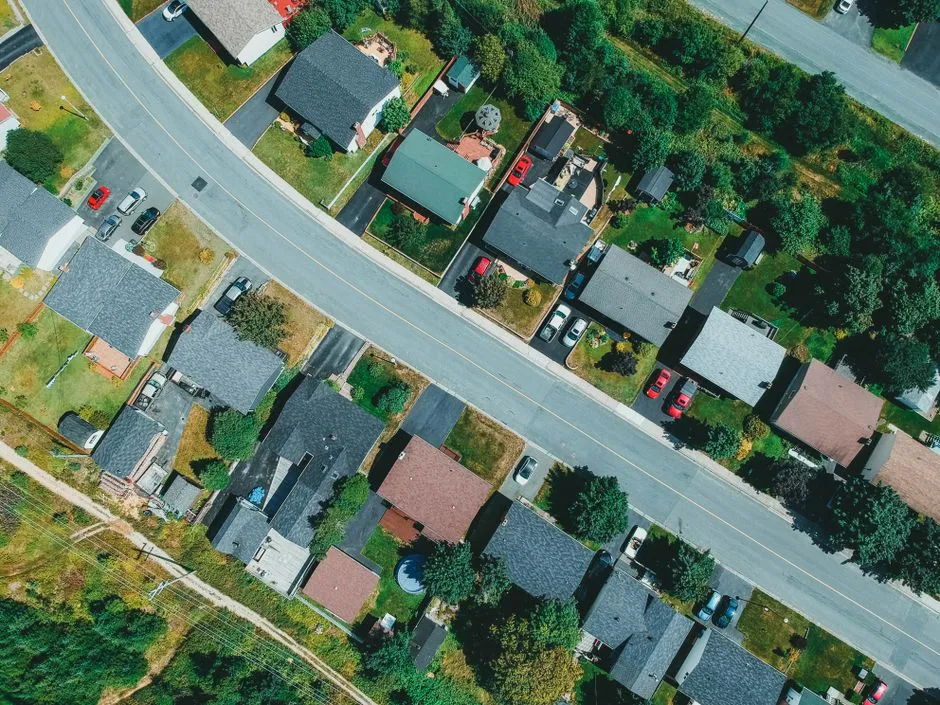
Suburban ZIPs are where the largest share of Americans actually live. Expect detached single-family homes on lots between a quarter and a half acre, a mix of townhouse and apartment complexes near major arterials, and a daily life that is largely organized around driving. Schools, parks, and shopping are typically a few minutes apart by car. This is the band where the gap between two adjacent ZIPs can be largest, because school assignments and HOA quality can swing house prices significantly inside the same nominal density.
Small town (200–800 ppl/sq mi)
Small-town ZIPs cover the historic main streets and surrounding neighborhoods of communities under about 50,000 residents. Lots are larger, parking is plentiful, and the commercial district is usually compact enough to walk in fifteen minutes. Housing is dominated by single-family homes, often older, with significant variation in condition. A small-town ZIP can be the best value in a state if you don’t need urban amenities and you have a remote-friendly job.
Rural (under 200 ppl/sq mi)
Rural ZIPs cover the bulk of US land area but a much smaller share of population. Expect long drives between everyday destinations, lot sizes measured in acres rather than square feet, and a quieter ambient soundscape. Internet quality varies sharply — check the FCC’s National Broadband Map before you commit to remote work from a rural ZIP. Housing costs are usually the lowest in the state, but property taxes and county services vary widely.
Why density beats “city size”
If you only know the city name, you can be wildly wrong about the texture of the neighborhood. Houston, Texas contains urban-core ZIPs and rural-fringe ZIPs inside the same official city boundary. The same is true of Phoenix, Jacksonville, Indianapolis, and most other large American cities that have annexed huge land areas. Density at the ZIP level cuts through that ambiguity in a way that city or even county statistics cannot. For a methodology overview, see how we build ZipNest.